The Tethys Research Institute aims to support marine conservation by producing rigorous scientific knowledge to inform effective protection strategies. Its research is intended to guide policy and raise awareness on emerging threats such as ship strikes, underwater noise, and habitat degradation.
By engaging in international conservation initiatives and promoting place-based measures like marine protected areas, Particularly Sensitive Sea Areas (PSSAs) and Important Marine Mammal areas (IMMAs), the Institute seeks to contribute to the long-term preservation of cetaceans and their marine environment.
Tethys works closely with regional and international bodies including ACCOBAMS, the Pelagos Agreement, the International Whaling Commission (IWC), the International Maritime Organization (IMO), and the European Union, in order to promote cross-boundary conservation strategies.
The Pelagos Sanctuary
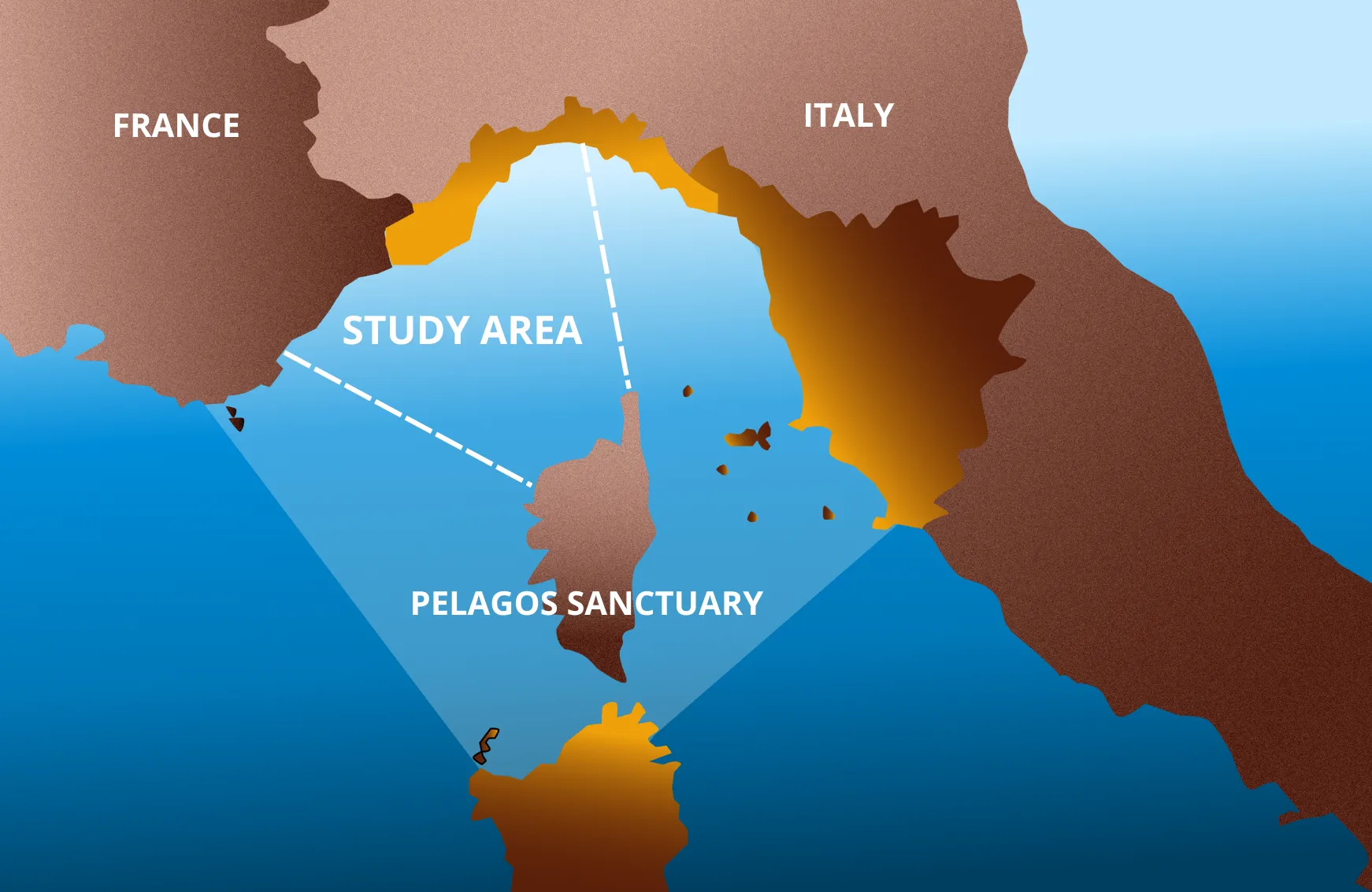
Tethys was the first to propose the creation of a transboundary area for the protection of cetaceans in the northwestern Mediterranean Sea. Based on pioneering research cruises conducted between 1987 and 1989, the Institute provided the first scientific evidence of a high cetacean density in the Ligurian Sea, underscoring the need for dedicated protection measures.
The proposal was formally presented in 1991 to H.S.H. Prince Rainier III of Monaco, catalyzing international cooperation and ultimately leading to the establishment of the Pelagos Sanctuary for Mediterranean Marine Mammals—the world’s first marine protected area beyond national jurisdiction. The initiative was formalized by a treaty signed in 1999 by Italy, France, and Monaco.
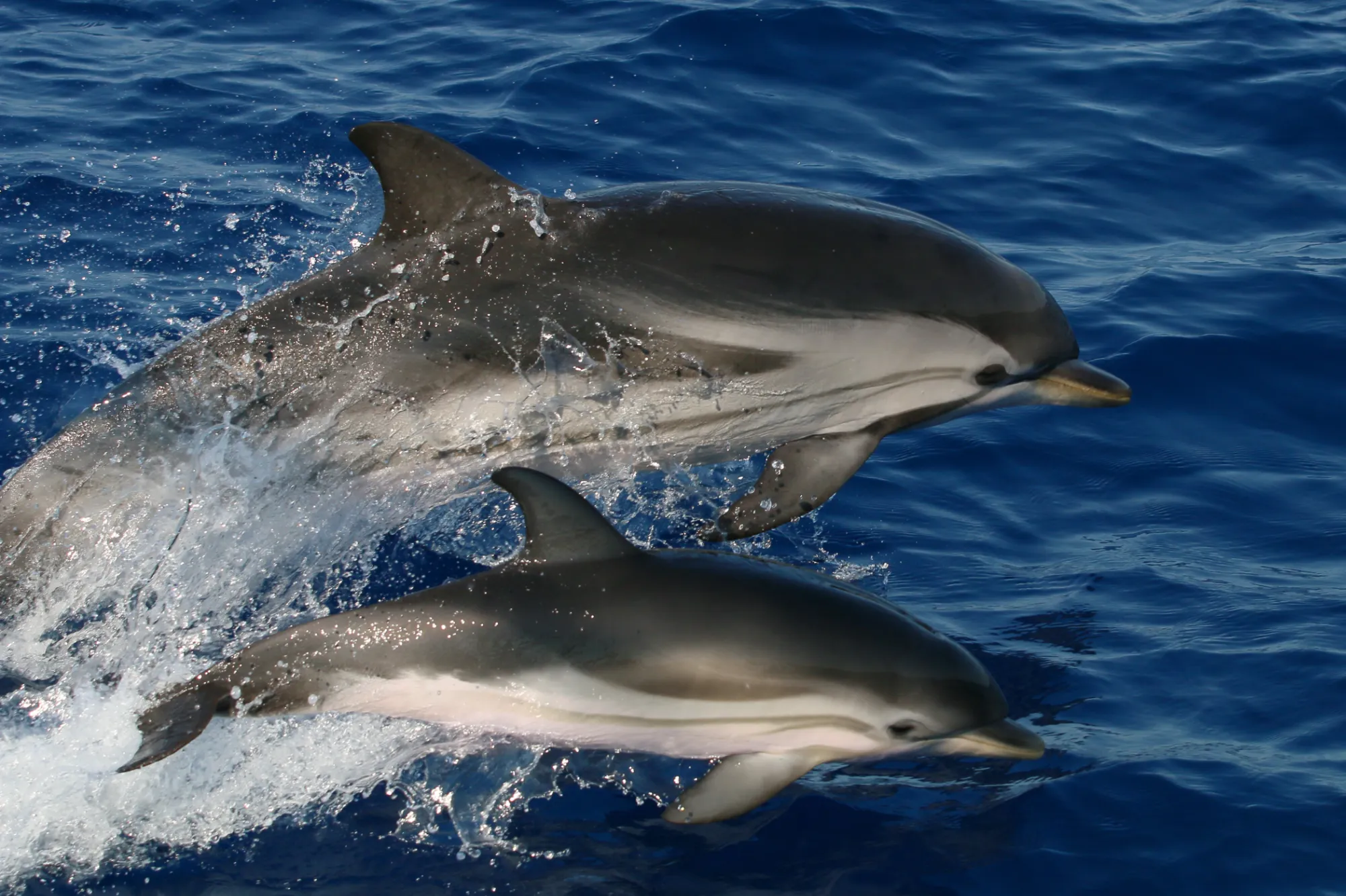
Today, the Sanctuary covers almost 90,000 km² and hosts eight species of cetaceans. However, it is also subject to intense human pressure, including maritime traffic, pollution, habitat degradation, and accidental bycatch. Tethys continues to monitor these threats and supports evidence-based conservation strategies within the area.
Important Marine Mammal Areas
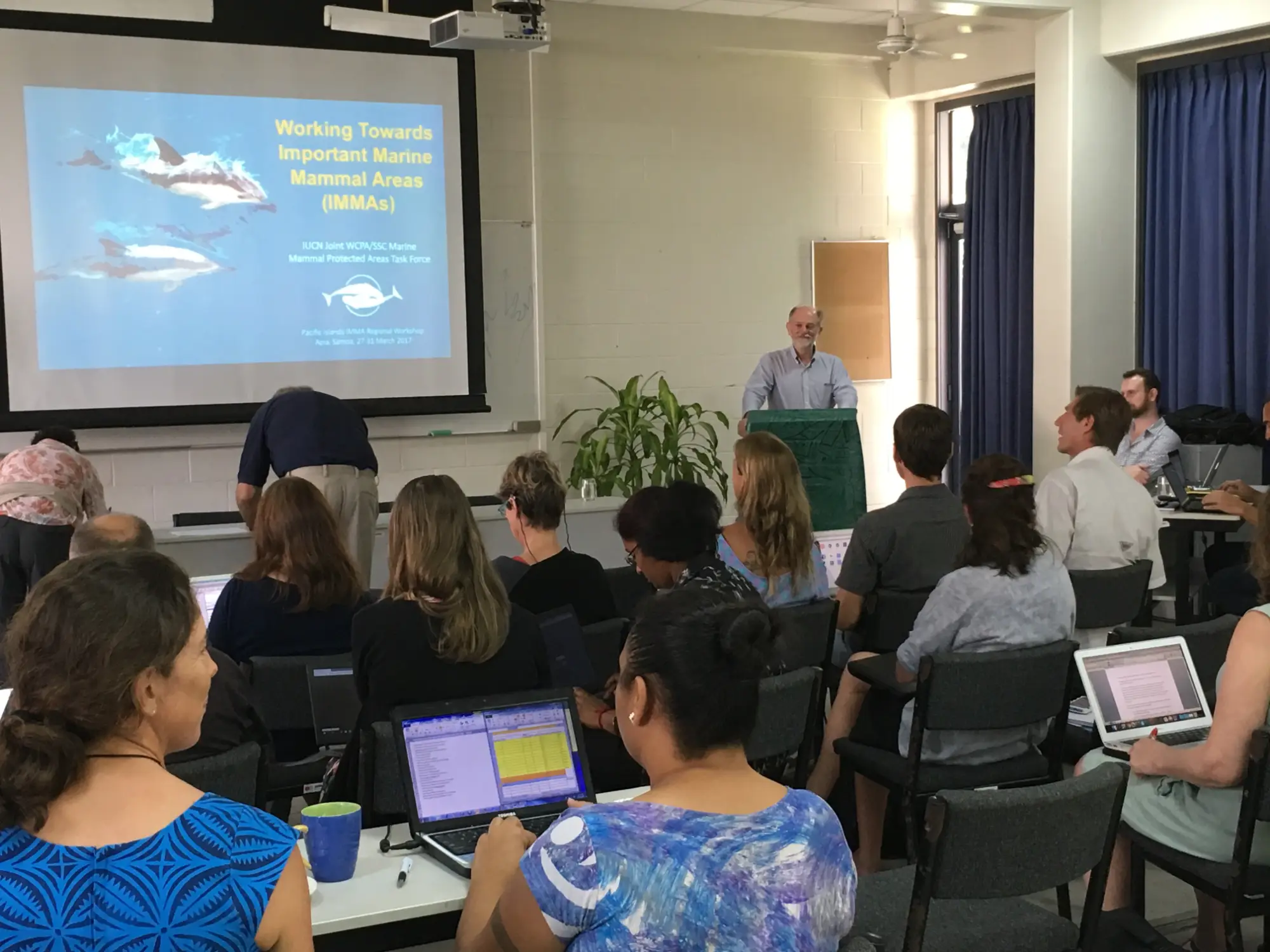
IMMAs are scientifically identified portions of marine habitat that are critical to the survival and well-being of marine mammals. Despite not being legal designations, they serve as valuable tools for guiding conservation efforts, marine spatial planning, and biodiversity protection.
The Tethys Research Institute played a foundational role in the creation of the IMMA initiative, as a co-founding member and co-chair of the IUCN Marine Mammal Protected Areas Task Force. It has since provided scientific, technical, and logistical support to the process. In 2016, Tethys organized the first IMMA workshop for the Mediterranean region, in collaboration with ACCOBAMS, laying the groundwork for the identification of priority habitats across the basin.
Since then, Important Marine Mammal Areas have been identified in multiple ocean basins. By integrating IMMAs into broader conservation frameworks—such as Ecologically or Biologically Significant Areas (EBSAs) and Key Biodiversity Areas (KBAs)—the initiative helps prioritize habitats in need of protection.
Ship Strike Mitigation
Collisions with vessels pose a serious threat to large whale species in the Mediterranean, particularly fin and sperm whales. Many incidents result in injury or death, although most of them likely go unreported.
Since 2001, the Tethys Institute has been actively involved in addressing this issue, starting with the organization of a dedicated workshop within the European Cetacean Society. In collaboration with the International Whaling Commission (IWC) and ACCOBAMS, Tethys has documented ship strikes, promoted data sharing, and supported the development of mitigation strategies to reduce risks and raise awareness.
IUCN Red List
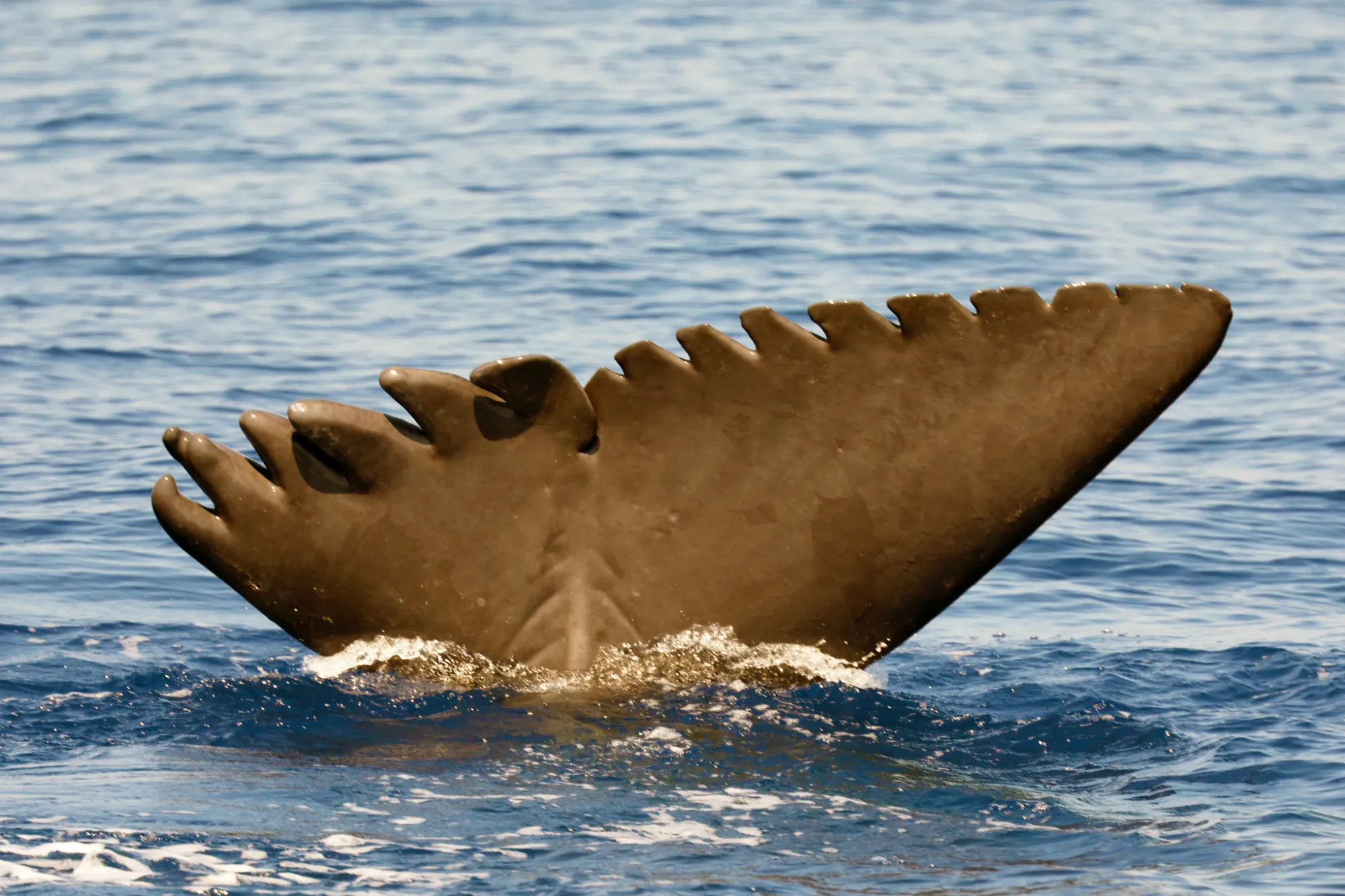
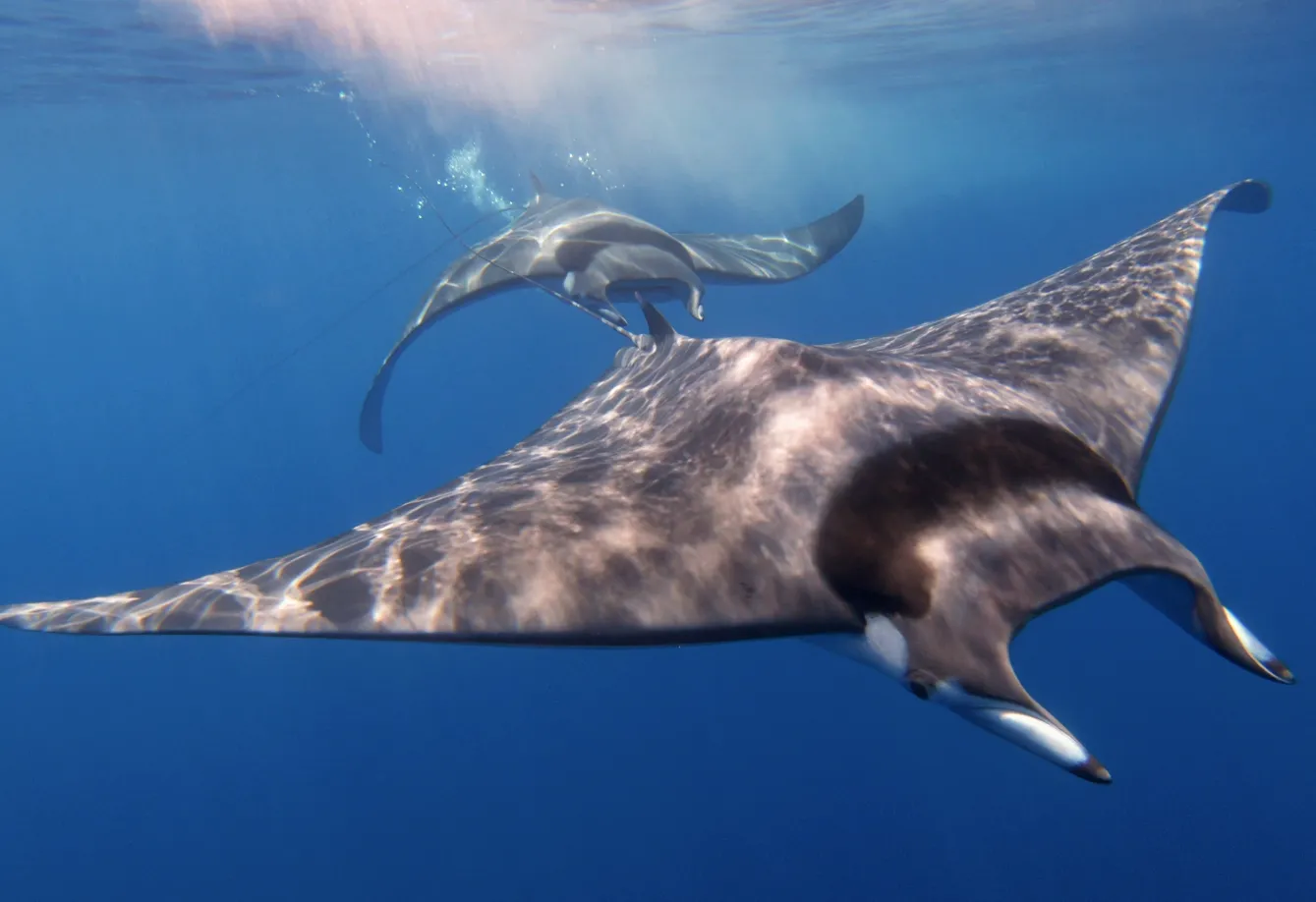
Tethys experts have contributed to the inclusion of several Mediterranean taxa in the International Union For Conservation of Nature Red List of Threatened Species, including regional subpopulations of various cetacean species and the spinetail devil ray (Mobula mobular).
Mediterranean Monk Seal
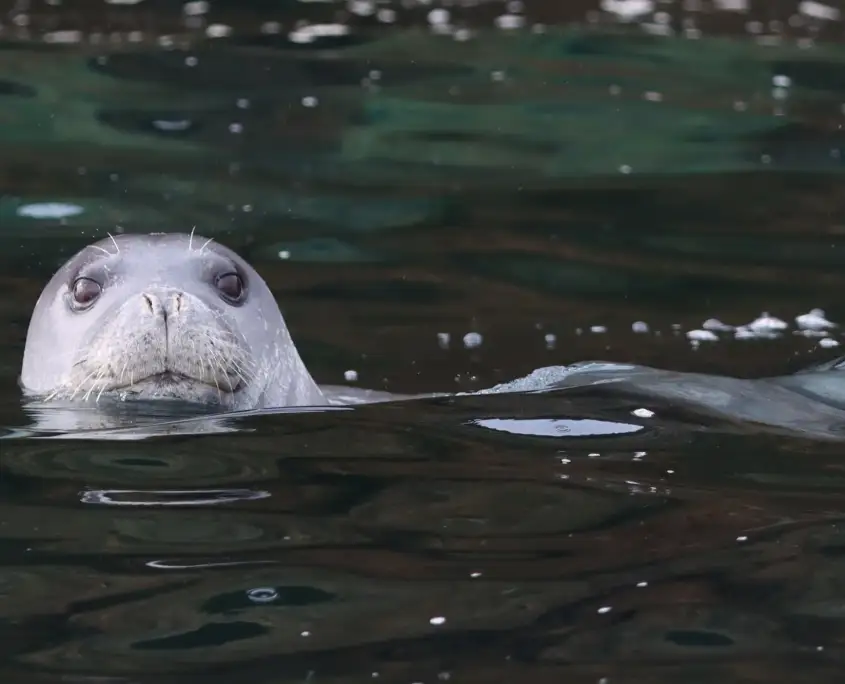
Once widespread across the Mediterranean, the monk seal (Monachus monachus) is now one of the world’s most endangered marine mammals. Greece remains a key stronghold for the species, yet the seals continue to face serious threats, including habitat degradation, human disturbance, and tourism pressure in critical areas.
Through long-term research and data collection, Tethys has played an active role in shaping conservation efforts for the monk seal in Greece. Its scientific expertise contributed to the formulation of the country’s national strategy and action plan, as well as to the Regional Strategy for the conservation of monk seals in the Mediterranean, adopted under the Barcelona Convention in 2013.
Together with other civil society actors, Tethys played a key role in promoting the 2024 ministerial decree that established a 200-meter access restriction around the islet of Formikoula, a critical monk seal habitat in the Inner Ionian Sea. The measure aims to reduce human disturbance and protect the area’s growing monk seal population, allowing individuals to rest, feed, and breed undisturbed.